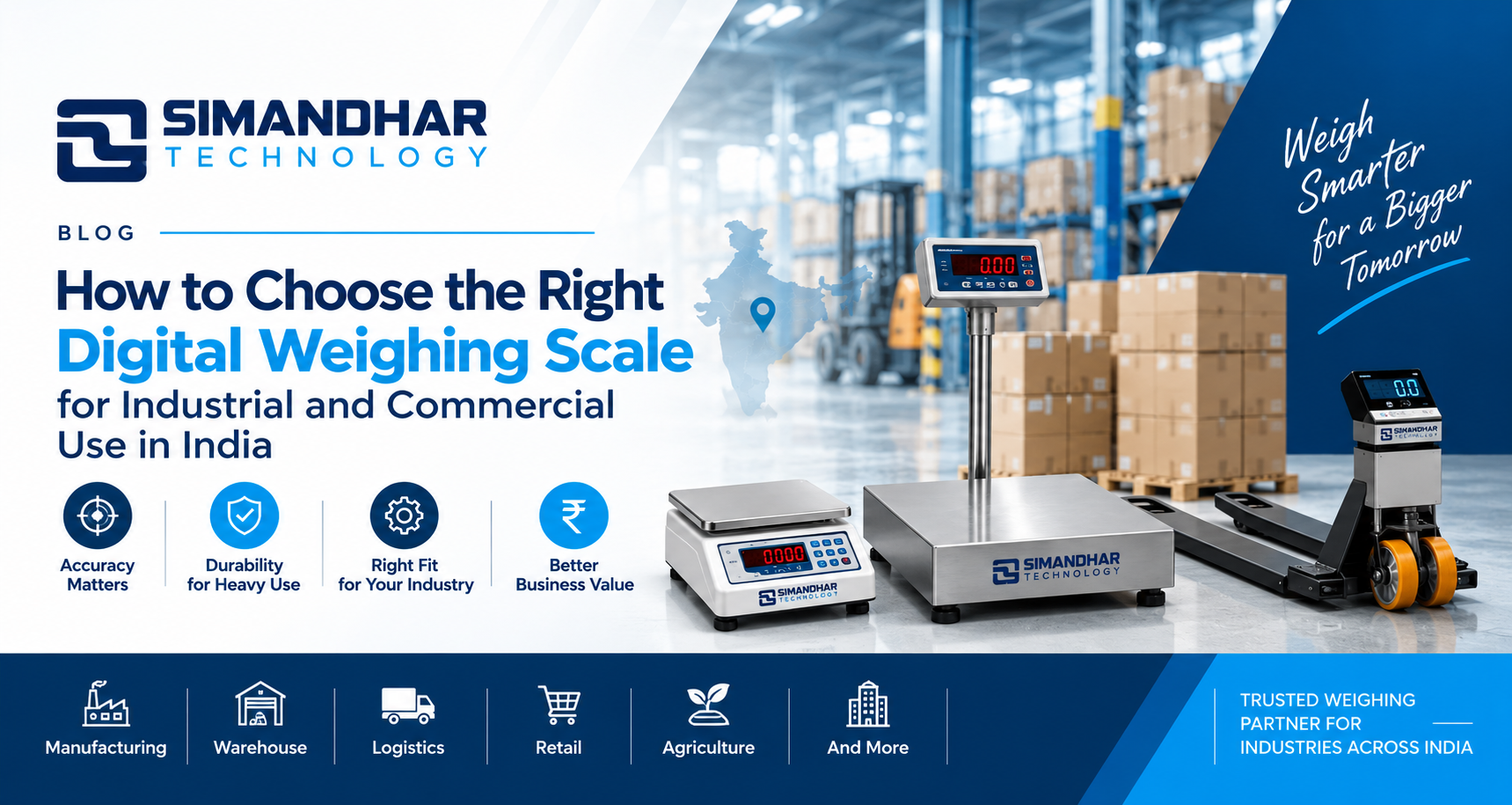
Choosing the right digital weighing scale is more important than simply selecting a machine with the required weight capacity. For businesses, weighing accuracy can directly affect inventory, production, billing, quality control, material consumption and operational efficiency.
Whether you operate a manufacturing plant, warehouse, logistics business, retail outlet, agricultural facility or food processing unit, the right industrial weighing scale can make daily operations faster and more reliable.
With different types of electronic weighing scales available in the market, understanding your application and weighing requirements is the first step toward making the right investment.
What Is a Digital Weighing Scale?
A digital weighing scale is an electronic weighing instrument that uses load cells and electronic components to measure the weight of an object and display the result digitally.
Compared with traditional mechanical weighing systems, digital scales provide easy-to-read measurements and can offer features such as tare, zero tracking, programmable settings, data connectivity and printing, depending on the model.
Modern weighing systems are used across manufacturing, warehousing, logistics, agriculture, food processing, retail and many other industries.
For industrial applications, the scale must be selected according to the load, operating environment, required accuracy and weighing process.
Why Is the Right Weighing Scale Important for Businesses?
An unsuitable weighing machine can create more problems than it solves. Incorrect capacity, poor installation or inadequate accuracy can result in material wastage, inventory discrepancies and production issues.
For example, a manufacturing company may use weighing equipment for raw material measurement and batching. A warehouse may need to weigh pallets and packages, while a logistics company may require systems capable of handling heavier loads.
The right electronic weighing scale helps businesses:
-
Improve weighing accuracy
-
Reduce material and inventory discrepancies
-
Speed up weighing operations
-
Improve quality control
-
Support accurate billing and dispatch
-
Reduce manual errors
-
Improve production efficiency
-
Handle repetitive industrial weighing operations
Types of Digital Weighing Scales for Different Applications
There is no single weighing scale suitable for every business. The best option depends on the application.
1. Platform Weighing Scale
A platform weighing scale is one of the most commonly used industrial weighing solutions. It is suitable for weighing boxes, bags, drums, raw materials, finished products and pallets.
Platform scales are widely used in manufacturing plants, warehouses, logistics facilities, agriculture and other industrial environments.
They are available in different platform sizes and capacities to accommodate different types of loads.
2. Floor Weighing Scale
Floor scales are designed for businesses that need to weigh heavy materials directly on the factory or warehouse floor.
They can be useful for weighing large containers, pallets, industrial materials and finished goods.
The available configuration should be selected according to floor conditions, load requirements and the way materials are moved around the facility.
3. Bench Weighing Scale
A bench scale is a compact weighing solution designed for smaller loads.
It can be used in manufacturing, packaging, food processing, retail and other applications where products can be placed on a workbench or compact platform.
4. Counting Weighing Scale
A counting scale helps businesses determine the quantity of identical components based on their weight.
This can be particularly useful for inventory management and manufacturing operations involving items such as nuts, bolts, screws, electrical components and other small parts.
5. Pallet Weighing Systems
Warehouses and logistics operations often need to weigh goods without spending excessive time moving pallets between different areas.
Pallet weighing systems can help streamline this process and improve weighing efficiency in material handling operations.
6. Weighbridges
For businesses handling trucks and large commercial vehicles, weighbridges provide a solution for high-capacity vehicle weighing.
They are commonly used in industries such as logistics, mining, agriculture, construction, manufacturing and bulk material handling.
7 Factors to Consider Before Buying a Digital Weighing Scale
Before purchasing an industrial weighing scale, evaluate these important factors.
1. Required Capacity
Start by identifying the maximum load that needs to be weighed.
Do not select a scale simply because it has the highest available capacity. The weighing range should match your actual application while providing an appropriate safety margin.
2. Required Accuracy
Capacity and accuracy are not the same thing.
A warehouse handling heavy pallets may require a different level of readability than a manufacturing process measuring smaller components.
Identify the smallest weight difference that matters to your business before selecting the scale.
3. Platform Size
The platform should comfortably accommodate the items being weighed.
A platform that is too small can make loading difficult and may create safety or operational problems. Consider the dimensions of boxes, pallets, drums or other materials that will be placed on the scale.
4. Operating Environment
Industrial environments can expose weighing equipment to dust, moisture, vibration, temperature changes and heavy usage.
If the scale is going to be used in a demanding environment, construction materials, protection levels, load-cell design and indicator specifications should be evaluated carefully.
5. Load Cell Quality
Load cells are a critical part of an electronic weighing system because they convert the applied load into an electrical signal.
A reliable weighing system should use load cells appropriate for the capacity, accuracy and operating conditions of the application.
6. Display and Connectivity
Modern weighing systems can offer more than a simple weight display.
Depending on the application, businesses may require features such as:
-
Digital LED/LCD display
-
Tare and zero functions
-
Data output
-
Printer connectivity
-
Computer connectivity
-
ERP or software integration
-
Battery backup
-
Remote display
Selecting useful features can improve productivity and reduce manual data entry.
7. Calibration and After-Sales Support
Even a high-quality weighing machine requires proper installation, maintenance and calibration practices to maintain reliable measurements.
Businesses should consider the availability of technical support, spare parts, servicing and calibration assistance before purchasing a weighing system.
Choosing a Weighing Scale According to Your Industry
Different industries have different weighing requirements.
Manufacturing: Platform, bench, counting and process weighing systems can support raw material, component and finished-product weighing.
Warehouse: Platform and floor weighing scales can help with pallet, package and inventory weighing.
Logistics: Parcel, platform, pallet and high-capacity weighing systems can support dispatch and material-handling operations.
Agriculture: Robust weighing systems can be used for grains, feed, produce, bags and other agricultural materials.
Food Industry: Hygienic and application-specific weighing equipment can support ingredient measurement, production and packaging processes.
Retail: Commercial weighing machines can support weight-based sales and customer transactions, subject to applicable regulatory requirements.
Why Choosing the Right Manufacturer Matters
Buying a weighing scale is not only about comparing the machine's capacity and price.
A reliable weighing scale manufacturer in India should understand your application and help you select the appropriate capacity, platform size, accuracy, load cells, indicator and configuration.
Before making a purchase, ask about product specifications, installation, calibration, warranty, maintenance and after-sales support.
For businesses with specialized requirements, customized weighing solutions may also be more suitable than an off-the-shelf model.
Final Thoughts
The right digital weighing scale can become an important part of your business's daily operations. From manufacturing and warehousing to logistics, agriculture, food processing and retail, accurate weighing helps businesses control materials, improve productivity and maintain operational consistency.
Instead of choosing a weighing machine based only on price, consider the complete application: capacity, accuracy, platform size, environment, load-cell quality, connectivity, calibration and after-sales service.
If you are looking for a reliable weighing solution for your business, consult an experienced weighing equipment provider and explain your exact application before making a purchase. The right recommendation can help you achieve better weighing performance and long-term value from your investment.